Wednesday, October 10, 2007

Monday, October 08, 2007
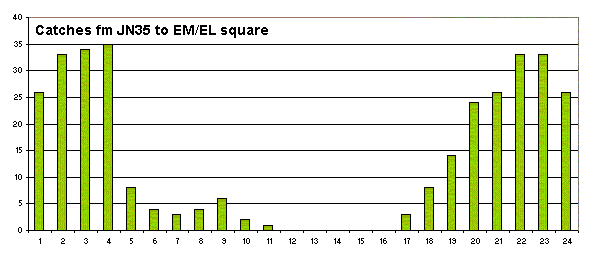
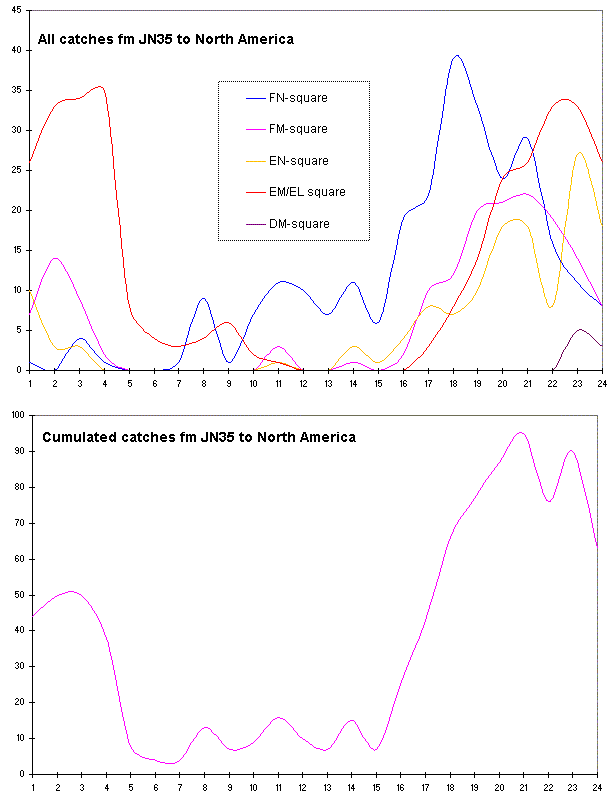
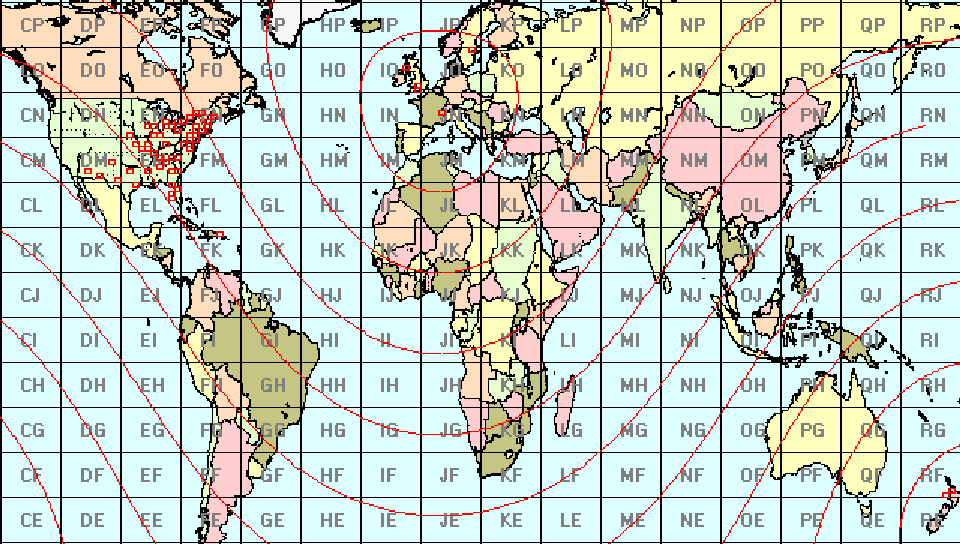
Propnet 30m weekend
Wednesday, October 03, 2007
Another vertical for 30, 40, 80 (and 160)
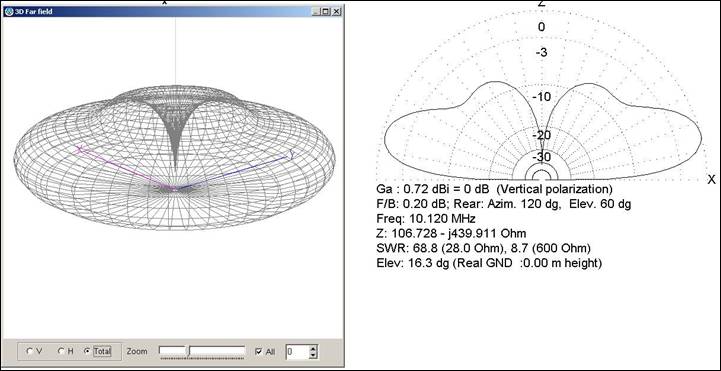
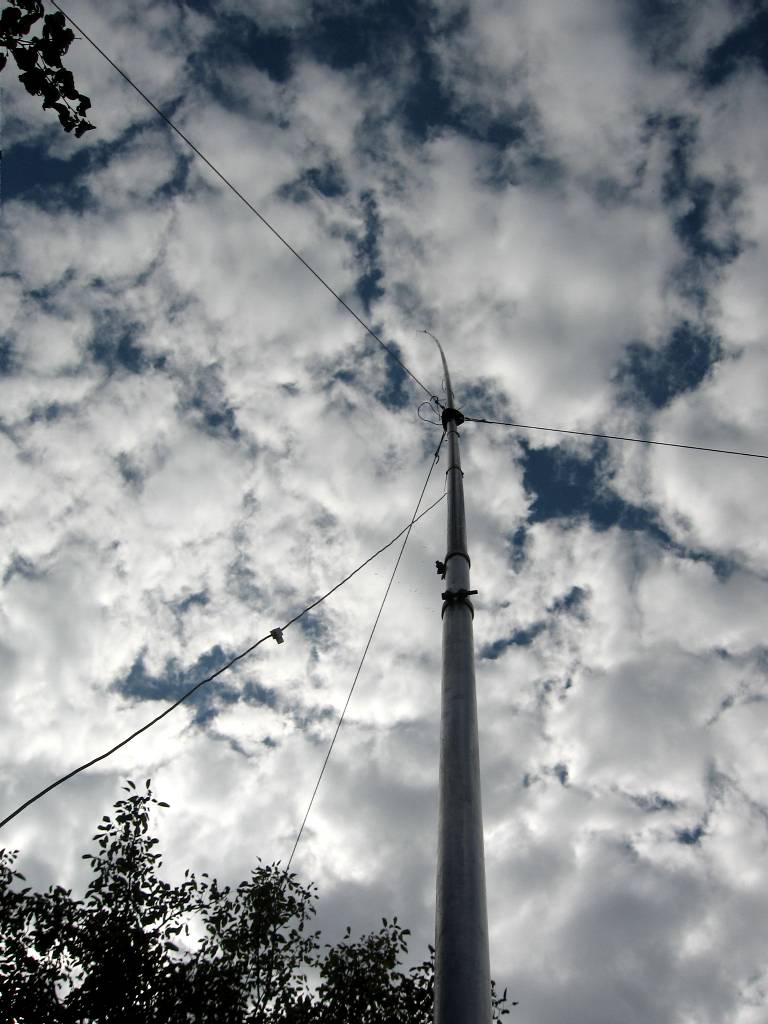
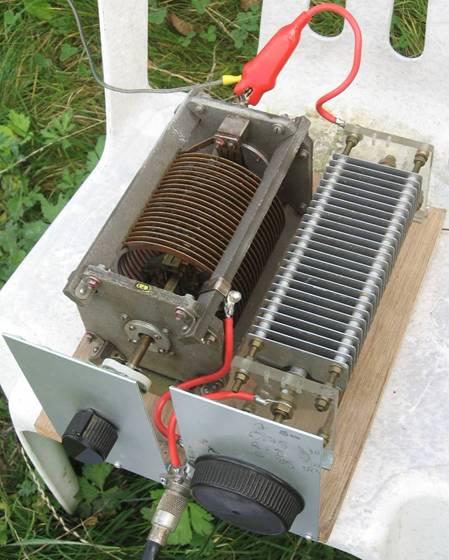
Following is a description of the multiband vertical antenna that I am using for several months.
Wednesday, September 26, 2007
Une verticale pour 30,40 et 80m
Ca faisait quelques temps que ce blog n 'avait pas été mis à jour ! Désolé...
Voici, pour me rattaper une description de l'antenne verticale bande basse que j'utilise depuis quelques mois.
Article en Français
Voici, pour me rattaper une description de l'antenne verticale bande basse que j'utilise depuis quelques mois.
Article en Français
Wednesday, March 28, 2007

Saturday, February 24, 2007
The CN2WW 80m wire-beam
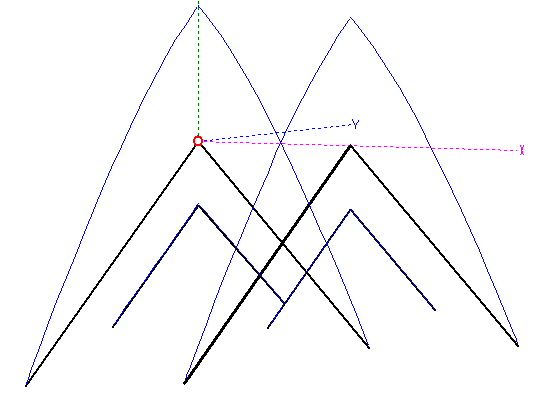 After testing the concept last year in the ARRL-DX from home (see http://f6irf.blogspot.com/2006/02/low-cost-2-elements-for-40m.html ) I designed a new antenna, especialy for the ARRL-DX from CN2WW. The terrasse dimensions, limiting us to 8m spacing, I used a director rather than the classical reflector. The drawing shows the 2 beams (40 and 80) using the same supports. Obviously with a such a reduced spacing (0.1 wl), the antenna cannot be designed for z=50 while giving satisfactory performances, but using a UNUN provides a perfect and broadband match, with very low losses (The steppIR uses the same type of broadband matching device). The multi-UNUN based on a W2FMI design and commercialized by CWSbytemark ( http://www.cwsbytemark.com/ ) offers an easy and flexible solution. A second unit allowed the 40 beam to be designed for max gain, with impedance around 36 ohms. The only difference is that the 40m UNUN was placed after a 1/2wl of cable, and not directly at the feed point ( the 40m dipole being on a fiber mast). The following graphs show the performances of the 80m aerial.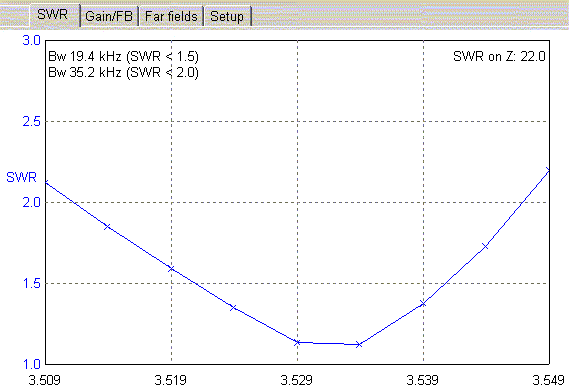
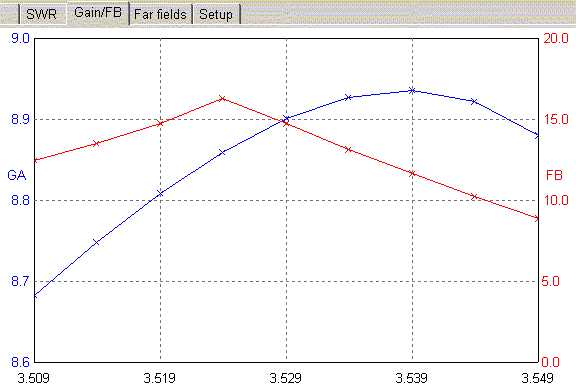
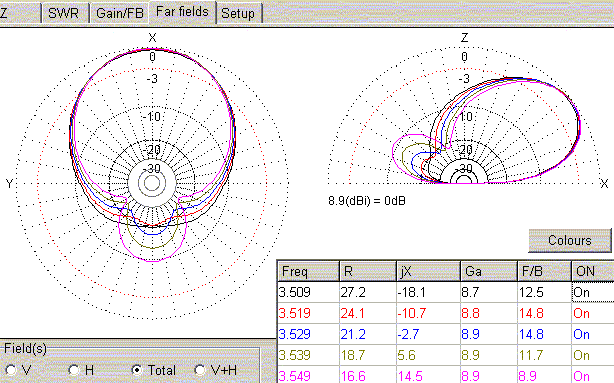 The bandwith was the main concern, but as shown by the graphs most of CW-contest band is usable with SWR below 2. Although I have full confidence in computer simulation, the results obtained with this aerial during the ARRL-DX really surprised me. see http://lists.contesting.com/archives//html/3830/2007-02/msg01551.html ). I believe that on top o f the 3.5dBd gain its main quality has been to protect us from the heavy EU-QRM.
 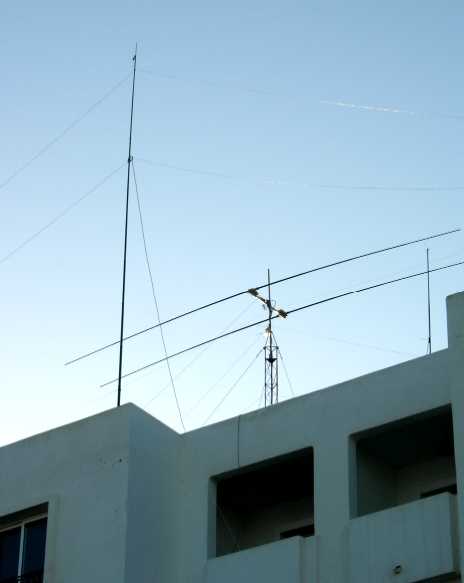 View of the aerials installed at CN2WW, the fiber mast supports the 40m dipole and the 80m director while the tower supports the 40m reflector and the 80m dipole.
 As information the dimensions provided by the computer model are the following one: For 8m spacing and a center angle of 120 degrees, the half-dipole is 21.18m and the half-director 20.6m. But of course the dimension may vary, fonction of the height, the angle, the environment, the wire used (i.e. plastic coated wire has a velocity factor in the order of 0.95), so it is strongly recommended to adjust the dipole alone first below the desired frequency (removing the director on the computer model gives 3.465 for jX=0) Then place the director and cut it until the desired frequency is obtained (3.532 for jX=0 ). I think that it is the best way to get the aerial working as expected.
Computer models (MMANA or NEC2) can be provided on request.
Sunday, February 04, 2007
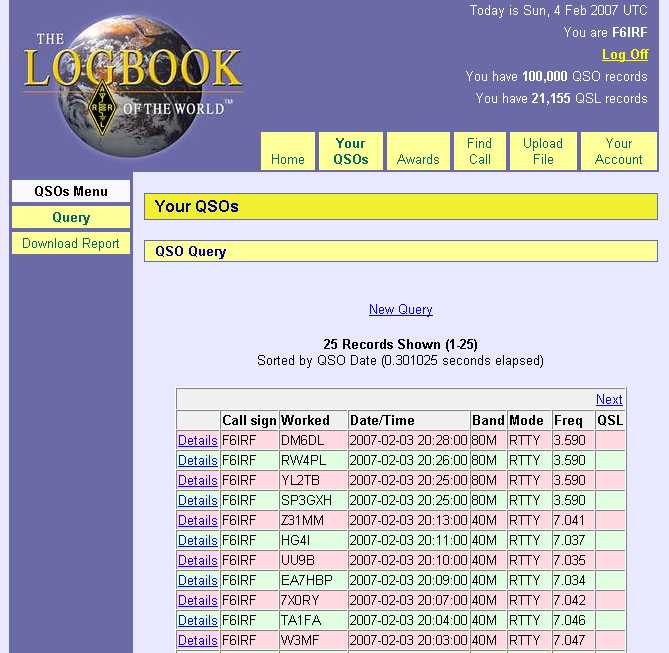
F6IRF 100,000 QSO's in 5years
 Today I have uploaded the 100,000 QSO, since march 2002 to LOTW. Those include QSO's done with F6IRF, F6IRF/P, TM6A, IS0/F6IRF, FG/F6IRF, UT/F6IRF/P and CN2WW callsigns.
DM6DL is the 100,000, and wins a CN2WW Tshirt :-)
Tuesday, January 30, 2007
IC7000 review

The good the bad and the ugly !
Recently bought this TRX for travelling around for contests and to replace my 706 which did not have the adequate CW/RTTY filtering for contesting...
Weight= 2.3kgs, was also one of my motivations, taking into account the new limitations for hand-carried cabine luggage!
Tried this weekend in CQWW-160 and REF-test
THE GOOD
- Being familiar with the 706, it did not take long to get familiar with it... a few things have changed, but the user interface philosphy, remains moreless the same.
The display is really bright and contrasted and does not require that I put my glasses on...
For a CW-contester RX DSP-Filtering is really the strong point of this transceiver, together with the usual ICOM strong points (I am also owner of 756pro2). The "strong signal" resistance is not as good as my pro2, but sure better than the 706 (ie on 706 the preamp was unusable on 20m and the attenuator often required on 40)
A few have reported temperature problems... did not see this even during long sterile auto-CQ sequences with 3s RX-time. The temp indicator always remained in the blue zone (Had even tried 4 hours of the same regime at full CW-power on a dummy load B4 the contest - no problem...). Haven't tried yet in TTY... will see!
THE BAD
- Do not like the RIT/XIT on the coaxial pot... even more unusable than the 706 RIT (why not the main dial when selecting RIT like in the Yaesu FT857D. It Would be far more convenient !). Of course it is possible to use the split, but there is always a risk to move the TX freq, especialy when using auto-CQ from your contest software.
- A pity that the local-monitoring (CW-sidetone and SSB-monitor) is not available from the fixed-level audio output on the ACC connector (if you record your pile-up through this line, you won't have your own signal !)
- The RF-power output is a bit "limited": From 95W on 160 down to 80W on 10m and 75W on 6m (but will check this again with a professional wattmeter). Not a problem when using a modern tetrode PA or an SSPA, but a bit just for entering LP-category (especialy in those contests for which LP is 150w
THE UGLY
- The long spotted "audio white noise" is really annoying with a normal headphone without pots. It becomes acceptable with audio-pot around 11h, so will make an external attenuator / low-pass filter for the next contest, but it is a pity that Icom did not fix this pbm, despite all user-complaints (maybe for the PRO version!?). Maybe another solution is to use a vintage low sensitivty/limited bandwidth headphone.
SUGGESTIONS FOR THE PRO VERSION
- Improvement of the a/m BAD and UGLY features
- Why not make the second SO-239 connector (dedicated to VHF/UHF) usable for a second HF antenna and/or a RX antenna (it sure would be appreciated by 160m freaks !). It could be done from the main setup menu (disabling VHF/UHF, if required)
Of course this is a CW-contester/DXpeditionner point of view which may not be relevant if your main use is as mobile-rig... Despite the few a/m problems it is definitely a good choice for a small TRX, so I give it 4/5.
Regards and 73's
Patrick
F6IRF/CN2WW
Tuesday, January 09, 2007
F6IRF in CQ ham-radio (JA)
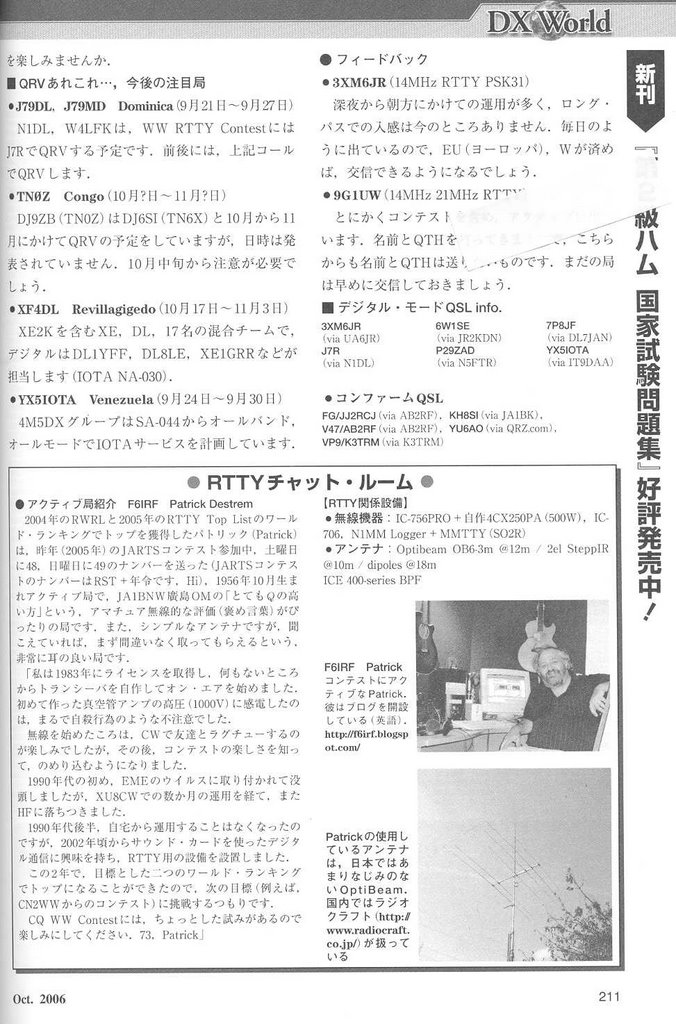
Thanks to Hisami 7L4IOU for sending me the October 2006 issue of the Japanese magazine CQ-ham radio.
Monday, January 08, 2007
F6IRF/P: A bit of traffic from South Britanny
 Stew Perry Topband Challenge
Call: F6IRF/P
Operator(s): F6IRF
Station: F6IRF/P
Class: Single Op LP
QTH: IN87
Operating Time (hrs): 8
Total: QSOs = 112
Total Score = 1,416
IC756pro2 -100W
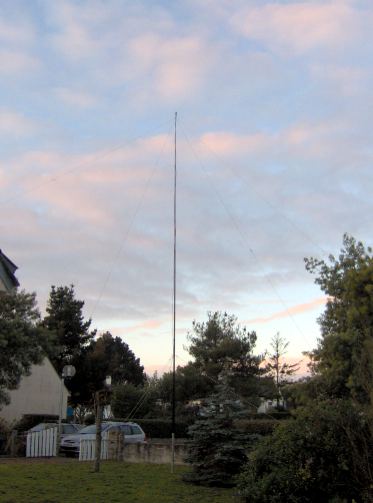
inverted-L on 2x 12m fiber masts
One of the 12m mast used to support the 160m inverted-L
Part-time effort, just to enjoy the low-noise level of my secondary QRA on a band which is usualy forbidden for me due to the HT-line hi-noise level at my main location. Quite a few DX stations heard, but none logged...
Une participation en diletante, juste pour apprécier le calme radio-electrique du QRA secondaire, sur une bande qui m'est habituelement "interdite" en raison,du fort bruit de fond généré par la ligne 380kV qui jouxte le QRA principal. Pas mal de stations DX entendues, mais aucune contactée...Les condx ne semblaient pas terribles, aucune station W/VE dans le log, alorsque j'en ai assez facilement contacté qqs unes pendant la semaine...Stn: IC756 et antenne L-inverse sur 2 mats en fibre de 12m. (pas de radians...juste le grillage entourant le QRA en guise de contrepoids...)QTH: Arzon, dpt-56 (au bout de la presqu'ile de Rhuys, entre golfe et ocean...)
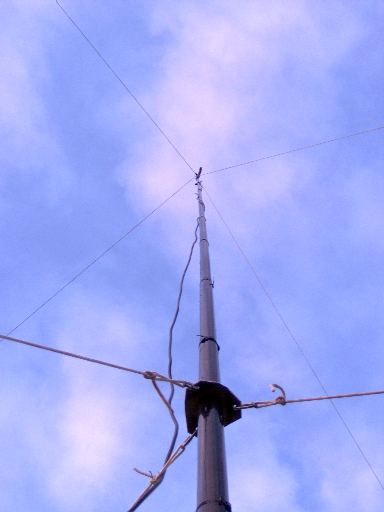
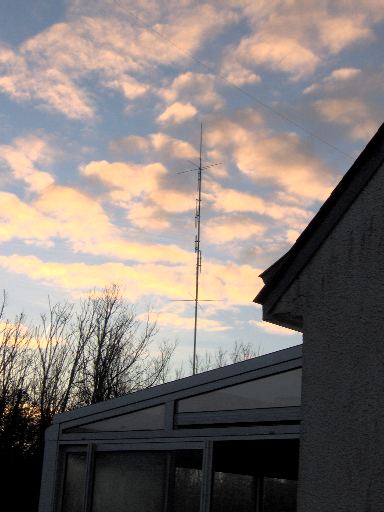 Above, the mast, also supporting a 30m dipole, and here the R7 antenna
I have been active all week, mostly on 160, 30 and 17m both in CW and digital modes... CN2DX on 160m, recorded fm F6IRF/P (CW and SSB)
Subscribe to:
Posts (Atom)